Mornings on the farm begin before the gate opens up. You can listen to the soft shuffle of hooves in the sand, ingests tracing arcs in the rafters, and the sort of quiet you can feel in your ribs. By the time the initial participant steps from crushed rock to barn aisle, the herd has actually already checked and resolved. This is when coaching starts, long before a word is talked. An equine snaps an ear, a client exhales, and a discussion forms that carries more reality than a lot of conferences at a conference room table.
Belonging based coaching is not a method as much as a stance. It begins with the assumption that individuals move toward growth when they feel seen, risk-free, and component of something. Equines, with their sincere comments and clear borders, aid us develop that ground underfoot. The farm ends up being the area where you can try once again, without needing to perform.
What belonging seems like around horses
Belonging is not a slogan on a barn wall surface. You can tell it is present when people quit supporting. Shoulders drop. Jokes land. The hesitant teen strokes a muzzle and fails to remember to see himself for a minute. The exec stops preparing her response while her coworker talks and decides to pay attention, really pay attention. In the very best sessions, the nerves takes the lead, and labels show up after the body recognizes what is true.
In my collaborate with equine-assisted training and restorative horsemanship, belonging emerges from three ingredients that reinforce each other. First, the herd, which designs cooperation and borders moving. Second, the farm atmosphere, which invites sensory engagement instead of screen-driven caution. Third, the assistance, which slows down things down and makes use of ordinary tasks as doorways to insight. When these align, equine-assisted solutions shift from unique activity to trustworthy container, the kind individuals return to since they can tell the ground holds.
Why the steeds matter
Horses are target animals. Their survival has actually always relied on reading the space, which is to state reviewing the body and breath of every little thing around them. They do not respect your title, your medical diagnosis, or your manuscript. They care if your feet are consistent, if your focus is scattered, if your ask is too loud or also obscure. You can muscular tissue a door open; you can not muscle a thousand-pound pet right into trust.
For a client that has actually learned to mask, this is disarming. For somebody that leads with beauty, it can be discouraging in the beginning, https://gregoryuxbl168.theglensecret.com/week-by-week-healing-consistent-equine-assisted-solutions-year-round after that clearing up. Horses observe what you do, not what you say. In equine-facilitated mentoring, we use this to light up just how patterns show up. Are you overhelping? Ask a horse to follow you through a set of cones and enjoy what occurs when you hurry in advance without signing in. Are you contrast averse? Try setting a clear boundary with a mare who keeps nosing right into your space and feel what it resembles to be company without being harsh.
Because comments from the herd is prompt and unpoliticized, it lands with a various weight. The change procedure comes to be experiential understanding with horses, not a lecture. Lungeing a gelding that mirrors your uneasy rate, then enjoying him settle as you clear up, seems like straight evidence that self-regulation is contagious. It is something to be informed that existence matters. It is an additional to see a steed select you because you lastly obtained peaceful adequate to be trustworthy.
The ranch itself as an encouraging space
I frequently fulfill clients that do not realize just how much energy they spend filtering system sound, light, and social hints. On the farm, all the common friction factors loosen a notch. The air smells like hay and dirt, not disinfectant. We trade fluorescent lights for skies. The acoustics of a barn request conversational tone, not projection. Your shoes get a little dust which is not just enabled, it works. Sensory inputs are abundant and trackable, instead of chaotic.
This issues specifically for people looking for Alternate treatment for sensory challenges. The rhythm of an equine eating hay, the heat along a flank in winter season, the muted thud of hoof on packed earth, these are basing signals for a nerve system that has found out to safeguard itself by adjusting out or showing up. In an encouraging farm room, people can widen their home window of tolerance without being swamped. We adjust intensity by moving from delay to sector to field, by selecting a peaceful gelding over a lively mare, by deciding to observe before we touch.
I have actually seen young clients on the autism equine discovering program discover their initial confident stride strolling next to a horse, small hand on lead rope, repeating a straightforward cue series till it comes to be a tune their body knows inside out. Parents frequently tear up when they enjoy. It is not the romance of horses. It is the evidence that their child can absorb the globe and respond, without shorting their own circuits.
Safety as authorization, not simply helmets
We talk a lot regarding physical safety and security in equine-assisted tasks. Headgears fit, boots secure toes, entrances lock, and we never shortcut a method due to the fact that the steed looks drowsy. That said, the safety and security that transforms individuals is relational. Consent is the spinal column of our job, spanning human and horse. We ask prior to we touch. We wait on an indeed that is not unclear. We honor a no, even when it is bothersome for the schedule.
I begin every program with a consent ritual that is straightforward and non-performative. It cues individuals that their sensations matter more than my agenda, and it educates them to search for the steed's signals with the same respect. Gradually, this ends up being culture. Individuals check ears and eyes. They notice yawns and decreases of the head. They find out that going back can be an endure move.
Here is a small checklist we maintain noticeable in the field whenever sessions are energetic:
- Is everyone here on purpose, and can they march at any time without penalty? Has the horse opted in, revealing unwinded stance and strategy, not just tolerance? Do all handlers recognize the plan, the leaves, and their functions, including who states stop? Are sensory needs called and sustained, from ear defense to damage spaces? Has the group settled on signals for time out, slow, and no?
Consent is not soft. It is solid sufficient to bring problem. The 10-year-old who says no to riding today and checks out brushing rather is developing a muscle we desire him to have. The manager who stops a team exercise due to the fact that her upper body is tight is modeling attunement, not fragility. Steeds mirror that quality. When we appreciate a horse's no, he often offers a more straightforward yes next time.
Who benefits, and exactly how we tailor the work
People get here for different factors. Stress and anxiety support with steeds is an usual access point for grownups that have actually tried talk-based mentoring however can not move the sensation of fear that hums with their mornings. They frequently carry their shoulders by their ears and talk as if excusing taking room. In the arena, we start with basing via the senses, not cognitive reframing. We might count steps in time with a gelding's stroll, or match our breath to the brush's stroke, down the neck, time out at the shoulder, up the hair. Somatic healing with horses is not magical. It is patient, repeated, and anchored in the here and now tense.
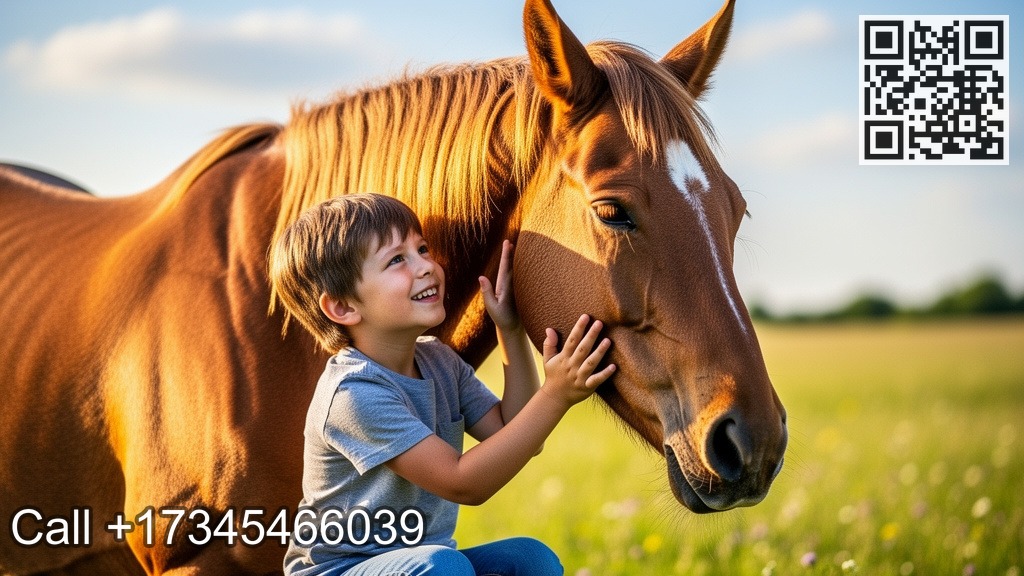
Families trying to find ADHD equine learning support desire activity without disorder, challenge without continuous improvement. Horses excel here. They reward clearness, not intricacy. We structure short sequences that construct executive feature: halter, cause a marker, halt, back 2 steps, take a breath till both of you soften, after that transform. The objective is not obedience drills. It is practicing initiation, follow up, and repair when a cue gets garbled. Many kids that have a hard time to rest still can stand very still when an equine's muzzle is in their hands, breath warm on their knuckles, due to the fact that it lastly matters.
The autism equine discovering program on our ranch blends routine with choice. We maintain changes foreseeable and aesthetic, however we offer actual decisions that lug weight. Which brush initially. Which path via the cones. Where to stand to be very easy to adhere to. Some sessions remain on the ground for months. For others, riding at the stroll becomes part of the strategy, with 2 side pedestrians and a leader till the motorcyclist reveals sufficient trunk control and directional understanding to lower assistance. The procedure is not speed of improvement. It is the motorcyclist's regulation and agency.
Adults that sign up for equine-facilitated health often name stress and interference from their very own bodies. They feel like a head lugged around by an unwilling neck. With them, I incorporate in-barn pauses that appear like "absolutely nothing," and those minutes end up being the heart of the practice. Remain on a hay bundle, enjoy the mare drink, count your swallows, feel where your hips connect to the bale. Talk just if something is obvious. Then try the ask once more. Horses favor contradiction-free demands. So do people.
Program form, from arrival to integration
A well-held session feels seamless, even when a lots micro-decisions are relocating under the surface. I prefer a stable arc that gives customers time to get here, involve, and incorporate. It helps people and for group structure with equines when we host management groups from tiny firms.
Here is the easy four-phase flow we utilize most often:
- Arrival and alignment: park, walk the perimeter, a brief rundown, gear check, and shared introductions. Objectives are named gently, typically by describing what would certainly really feel different by the end. Groundwork engagement: pairing with an equine for observation, grooming, leading, and a couple of shaped jobs matched to capacity. Verbal processing remains minimal in the beginning, then builds as quality appears. Reflection moving: slow-moving walk around the field edge or seated time out in the arena, expressing what was observed, not why it took place. If riding is part of the plan, it frequently happens right here at the walk. Integration and exit: equate understandings to day-to-day live with one concrete commitment, schedule the following session, and dissolve the collaborate with a last examine state. Leave time to stand at the fence line a min before you struck the gravel.
Compression is tempting, specifically with business groups. It seldom aids. A 90-minute block is suitable for people. For groups, half day is the minimum that permits security rundowns, experiential workouts, and actual representation without hurrying. The very best feedback we obtain after these occasions is not "that was enjoyable," though it often is. It is "I understand what to change on Monday, and I already began."
How groups expand in the arena
If you want to check a group's capacity to connect, provide a vague project and a brief deadline. If you desire them to boost, place them with a steed and request a specific end result that requires nonverbal sychronisation. As an example, relocate an equine via a collection of challenges without touching his halter. Individuals will certainly talk, after that talk louder, then recognize the horse is standing with a bemused appearance awaiting somebody to obtain consistent.
The patterns surface swiftly. A pair prepares thoroughly and never steps. Another set acts decisively and leaves half the group behind. In excellent assistance, we pause the action and reset the structure: how will the equine understand what you are asking, and that is responsible for consistent contact? When teams realize that clarity and timing issue more than quantity, the power in the sector changes. Equine-facilitated coaching makes abstractions tactile. You can see trust, feel it in the rope, view it totter when stress spikes, and recover it with a breath and a softer hand.
I keep in mind a logistics company's procedures crew that invested twenty mins failing to ask a mare to tip onto a reduced bridge. They were utilized to shouting versus sound and rushing pallets with forklifts. When they silenced down and one person breathed enough time to match his ask with a launch, the mare tipped up. Their debrief did not mention steeds. It named handoffs, duplicative instructions, and the cost of hurrying under stress. They changed one radio protocol the next day and reported less missed out on loads that quarter. That is equine-assisted training doing its job off the farm.
Coaching, therapy, and when to refer
Lines issue. While some programs are provided by licensed mental health and wellness specialists under an equine-assisted services model, much of what we do beings in mentoring and understanding, not psychiatric therapy. We work with abilities, regulation, communication, and leadership behaviors, and we do it in partnership with equines. When injury material surface areas that would benefit from scientific support, we reduce, hold the boundary, and refer. Customers should have a clear agreement about extent from the beginning. A good farm is part of a network, not an universe unto itself.
Therapeutic horsemanship, which focuses on developing riding and horse-handling skills for individuals with diverse capabilities, has its very own standards and training pathways. It overlaps with our work however is not similar. A healing riding lesson has goals like improved equilibrium, bilateral sychronisation, and self-reliance at the walk. An equine-facilitated health session could never accumulate, yet deliver an extensive shift in how a participant experiences threat and safety. Both belong. Clarity concerning which you are using avoids overpromising and maintains equines and human beings safe.
Measuring what matters
It is simple to oversell influence by leaning on wonder stories. I choose stable metrics that value complexity. We track participation, completion of objectives set at consumption, self-reported changes on a three-item policy scale, and, with consent, short qualitative notes from caretakers or managers. For team programs, we ask for one behavior modification to implement within two weeks and adhere to up at 30 and 90 days to see if it stuck. Numbers are not the entire image, however they remove hopeful thinking.
Horse well-being is a metric also. We log session tons per horse, rest days, vet and farrier care, and evident anxiety indications like tail swishing, pinned ears, or refusals. If an equine pulls out greater than a handful of times in a month, we reassess his duty or work. Our obligation of treatment goes both directions.
Ethics and the steeds' say
Clients usually ask if the horses like the work. Some do, plainly. They walk to eviction when the van pulls in and plant themselves by acquainted faces. Others are better suited to pasture-based duties or single-client job. Matching character to task is a skill worth practicing. The saintly lesson pony is not constantly the ideal partner for an extremely anxious grownup. Often an extra expressive gelding that shows his displeasure welcomes better boundaries and a more accurate connection.
We never ever utilize an equine to achieve a human breakthrough. If an equine shows constant discomfort with a video game, we retire the game. If a client intends to ride yet the equine has a sore back, the ground is our class that day. The compromise is that we occasionally disappoint people in the moment to secure the relationship long term. That is a type of mentoring too.
Edge situations, constraints, and straightforward limits
An encouraging ranch area is not a cure-all. Weather shapes plans. Heat and humidity slim home windows of safe effort, specifically for older steeds. Cold raises rigidity for bikers with joint discomfort. Allergies can thwart best-laid objectives; we keep antihistamines available and ask folks to consult their companies in advance. If an individual is clinically unstable, proactively psychotic, or not able to adhere to basic safety signs, equine work might need to wait or be greatly modified.
Cost is a genuine barrier. Equines eat whether programs run. We provide sliding range slots moneyed by contributors and run team sessions that lower per-person costs. We also coach caretakers to convert barn finding out to home or school, so the worth maintains intensifying between check outs. For some, digital follow-ups maintain momentum when traveling is difficult. While that loses the horse's live presence, it aids incorporate gains and safeguards budgets.
Getting started, and what to try to find in a provider
Not every location that places an individual next to a horse is doing the same job. Ask how teachers are educated and by whom. Certifications matter much less than demonstrated competence, but qualifications from trustworthy bodies reveal a commitment to standards. Visit the farm. Look at the steeds' eyes. Are they curious or closed down? See a session from the rail with approval. Do you see consent signals honored at a strolling speed, or are individuals rushed through photo ops?
A good fit shows up in the consumption discussion. If the provider can pay attention greater than they pitch, if they can tell you no when required, and if they can name clear goals that you help define, you are on the ideal path. For institution areas, ask for educator-friendly documentation. For facilities, request instance sychronisation processes. For families seeking Different therapy for sensory difficulties, scenic tour at a peaceful time, observe your child's hints, and depend on what you see.
A quieter finishing that maintains working
Toward completion of last autumn, one of our long-time individuals arrived roughened by a hard week. He stood at the fence line for 10 mins without asking for a horse. The gelding he usually works with roamed over, not crowding, just close by. The male started to take in a steadier rhythm. He called something he could do that evening to make early morning much easier, after that spent the next fifty percent hour sweeping the barn aisle in long, calm strokes while the gelding slept in the sun. He left without a significant insight, simply steadier than he came. 2 days later he sent a short note: slept via, didn't clinch on waking. I keep that message as a reminder.
Belonging based coaching grows in the ordinary. It does not need dramatization. It stays in clear asks, fair limits, and the nerve to allow a herd of steeds tell you when you have located the appropriate pace. When individuals feel safe adequate to be specifically where they are, transform happens the means seasons do on a farm, with more persistence than spectacle, and with roots tough sufficient to hold through weather.